Crash Course Care: Streptocarpus

Streptocarpus are a group of plants that I have found to be one of the most rewarding to grow. They are very easy-going, come in small mini sizes that can grow comfortably in 3” pots or smaller when they mature or 5” to 6” pots when on the larger growing side. They also bloom sequentially on multiple flower stalks per leaf! They can easily become a “living bouquet” of sorts with enough time and care
given to them that is exactly what we seek
to help others achieve with this Crash Course
Care Guide on caring for Streptocarpus!
Light
Streptocarpus are some of the most easy-going plants when it comes to their light in my experience. I’ve grown mine under strictly artificial light since I first got them. They’ve been kept at variable distances from the lights (anywhere from 8” to 18” between lights and leaves), been hidden under taller foliage amongst other plants, and even just sat next to my growshelves. They haven’t suffered in any visible way in terms of growth despite these varying light conditions, however, they do seem a bit more willing to blast their flower buds when not under more ideal light conditions. I grow mine under the Barrina LED grow bars and they seems to really enjoy them.
Water
Streptocarpus are known as “fibrous rooted gesneriads” and lack the storage units that their cousins like Sinningias or Kohleria. They tend to enjoy the potting media to remain evenly moist all the time so self-watering wicks have been a life-saver when it comes to their care. Just be sure when utilizing a self-watering wicking system to use a free draining and airy media in order to allow roots to remain moist while also being able to breathe and avoid rotting. I also Ph adjust my water to around 5.5 - 6.5
as well as dechlorinate it to aid in nutrient uptake and prevent any issues with chlorine harming the plant.
Potting Medium
Streptocarpus are epiphytic plants that grow in mosses and debris amongst tree branches and rocks in regions in Central, Eastern, and Southern Africa. So as stated previously they enjoy a media that is able to remain evenly moist while also allowing enough airflow to the roots. Many growers will use African Violet marketed potting mix and amend that with extra perlite. I personally like to mix my own and use a 1:1:1 ratio of coco peat, perlite, ad vermiculite with my younger plants and then add extra perlite and vermiculite as they mature and get potted up. This seems to keep them happy and keep their roots properly aerated.
Feed
I go by the phrase “weakly weekly” and use a water soluble fertilizer at 1/10 strength for my Streps. I’ve used the Better-Gro Orchid Plus (20-14-13) and the Bloom City Cal-Mag in order to supplement in my fertilizer regimen. A well-balanced fertilizer like a 10-10-10 with macro and micronutrients is an ideal fertilizer.
Pruning
I prune my plants by simply cutting away unsightly parts of leaves like brown tips and deadheading the flower stalks once flowers either fall or age past the point of looking how I’d like. The trimming of leaves is simply an aesthetic choice and isn’t necessary but the deadheading of the flower stalks can cause the plant to redirect its energy to the production of seeds rather than growth or more flowers. You may also at some point need to divide your Streptocarpus as they can grow “multi-crowned” and will eventually multiply in points of growth and cause problems with crowding new growth or flowers trying to pop-up from the new growth. Divinding these crowns with an X-Acto knife or another sharp blade can allow you to replant in a more spacious pot or pot seperately to give to a friend or trade with someone!
All in all Streptocarpus, I believe, are one of the most easy-going and rewarding plants one could grow. Their fuzzy leaves can elegantly drape down over their pots and create a unique look against their blooms that are typically displayed like a bouquet of fresh flowers hovering above the foliage. These have very quickly become statement pieces amongst the rest of my plants with their nearly constant state of blooming and bright green, fuzzy foliage. And due to their ease of care and ability to easily bloom I have given a few away as gifts to friends and family trying to get them in on the houseplant action!
Happy growing!

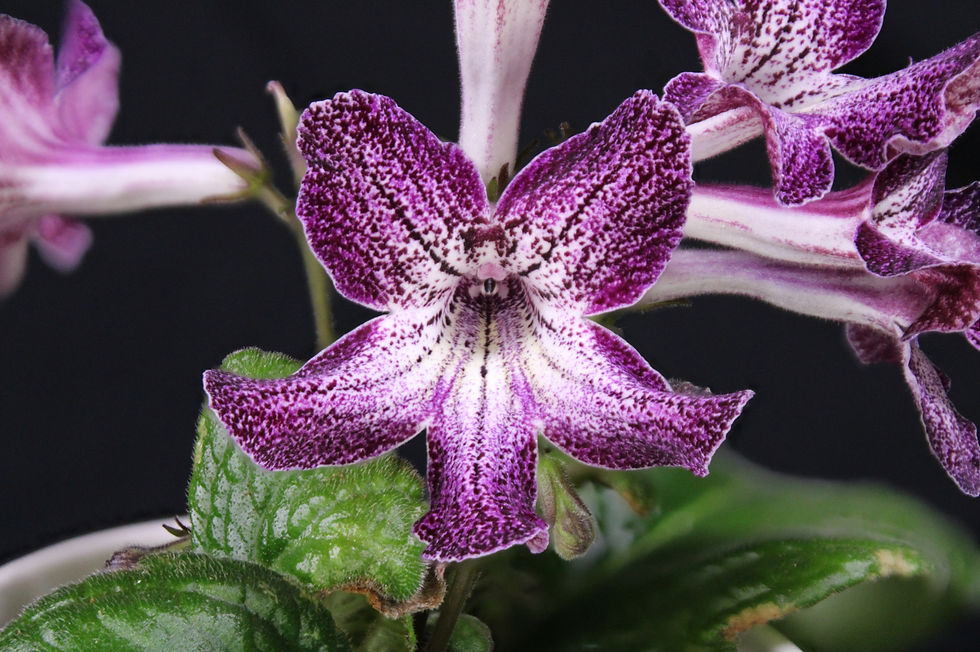


Photos in this post are all my own and my own plants
Comments